

READ THE OFFICIAL MURANIKA WEEKLY NEWSPAPER | 16–22 NOVEMBER 2026 (PDF)
Reporting period: 16–22 November 2026 | Categories: Technology, AI, Business, Economy, Science, Climate, Energy, World Affairs and Travel
The week brought together a series of decisions with consequences well beyond the rooms in which they were made. Across Asia-Pacific, leaders put regional integration and economic cooperation back in focus. Trade policy remained unsettled, technology investment continued at extraordinary scale, and Japan and India reinforced strategic coordination. Meanwhile, climate negotiators made progress on implementation but left important political questions unresolved. These are nine developments that deserve a closer look.
1. APEC leaders renew focus on regional trade, connectivity and innovation
Leaders from the 21 APEC economies gathered in Shenzhen on 18–19 November and issued the 2026 Leaders’ Declaration. The document identifies trade and investment, connectivity, innovation and economic growth as key areas for cooperation, while reiterating support for an open and connected Asia-Pacific and continued work on the Free Trade Area of the Asia-Pacific agenda.
Why it matters: APEC’s direction influences the policy environment for trade, supply chains and technology across one of the world’s most economically important regions. The test will be whether broad commitments translate into practical cooperation.
Official source: 2026 APEC Leaders’ Declaration
2. ASEAN and India deepen cooperation at the Manila summit
The 23rd ASEAN–India Summit took place in Manila on 17 November. Leaders reviewed the Comprehensive Strategic Partnership and adopted a joint statement on cooperation in disaster management, reaffirming the importance of regional resilience as ASEAN and India look ahead to the 35th anniversary of their dialogue relations in 2027.
Why it matters: Stronger ASEAN–India coordination can support disaster response, regional connectivity, trade and a more stable Indo-Pacific. The partnership’s value will depend on implementation across these areas.
Official source: Chair’s Statement of the 23rd ASEAN–India Summit
3. WTO warns trade restrictions are accumulating at a record pace
The World Trade Organization reported on 17 November that members introduced 1,048 new trade-related measures in the first half of 2026. Of these, 333 were restrictive or otherwise non-facilitating. Measures still in force covered 21.3% of world imports by value as of 30 June 2026, the highest share recorded since WTO monitoring began in 2009. At the same time, trade-facilitating measures also increased.
Why it matters: More trade barriers can raise costs and uncertainty for exporters, manufacturers and consumers. The simultaneous rise in facilitating measures shows that countries still have room to reduce friction and keep supply chains moving.
Official source: WTO trade monitoring report, 17 November 2026
4. NVIDIA results underline the scale of AI infrastructure demand
NVIDIA reported fiscal third-quarter revenue of US$115.8 billion on 17 November, up 103% year on year. Data-centre revenue reached US$107.6 billion, also more than doubling from a year earlier. The results offered another measure of the scale of spending on AI computing infrastructure.
Why it matters: Chip supply, data-centre capacity, electricity availability and capital spending across the technology sector are increasingly linked to the pace of AI adoption. Strong demand also raises questions about concentration and the sustainability of investment.
Official source: NVIDIA Q3 fiscal 2027 results
5. OpenAI expands free frontier-model access to 200,000 researchers
OpenAI announced on 16 November that it would expand its ChatGPT for Academic Researchers programme to offer up to 200,000 researchers worldwide free access. The next application round was scheduled to open on 23 November, with 50,000 new grants available to eligible researchers and collaborators.
Why it matters: Wider access could help research teams test ideas and accelerate work in science, mathematics and engineering. It also makes transparent data-use policies, reproducibility and independent evaluation increasingly important.
Official source: Broadening access to AI for scientists
6. Japan and India reinforce security and Indo-Pacific coordination
Foreign and defence ministers from Japan and India held their fourth 2+2 dialogue in Tokyo on 19 November. They discussed a free and open Indo-Pacific, maritime security, defence cooperation, joint exercises and closer coordination on regional and global issues. The ministers also reaffirmed the strategic partnership between the two countries.
Why it matters: The dialogue signals that two major Asian economies intend to deepen strategic coordination alongside their economic and technology relationship, with implications for maritime security and regional stability.
Official source: Japan Ministry of Foreign Affairs — Fourth Japan–India 2+2 meeting
7. EU and Indonesia sign trade and investment agreements
The European Union and Indonesia signed their Comprehensive Economic Partnership Agreement and Investment Protection Agreement on 21 November. The European Commission says the agreements are intended to diversify trade relationships, improve market access and strengthen supply chains for energy and raw materials. The Commission projects EU exports to Indonesia could increase by almost 40% within 15 years.
Why it matters: The agreements connect the EU more closely with Southeast Asia’s largest economy. Their full commercial effects will depend on ratification, implementation and the detailed rules governing market access.
Official source: European Commission — EU trade relations with Indonesia
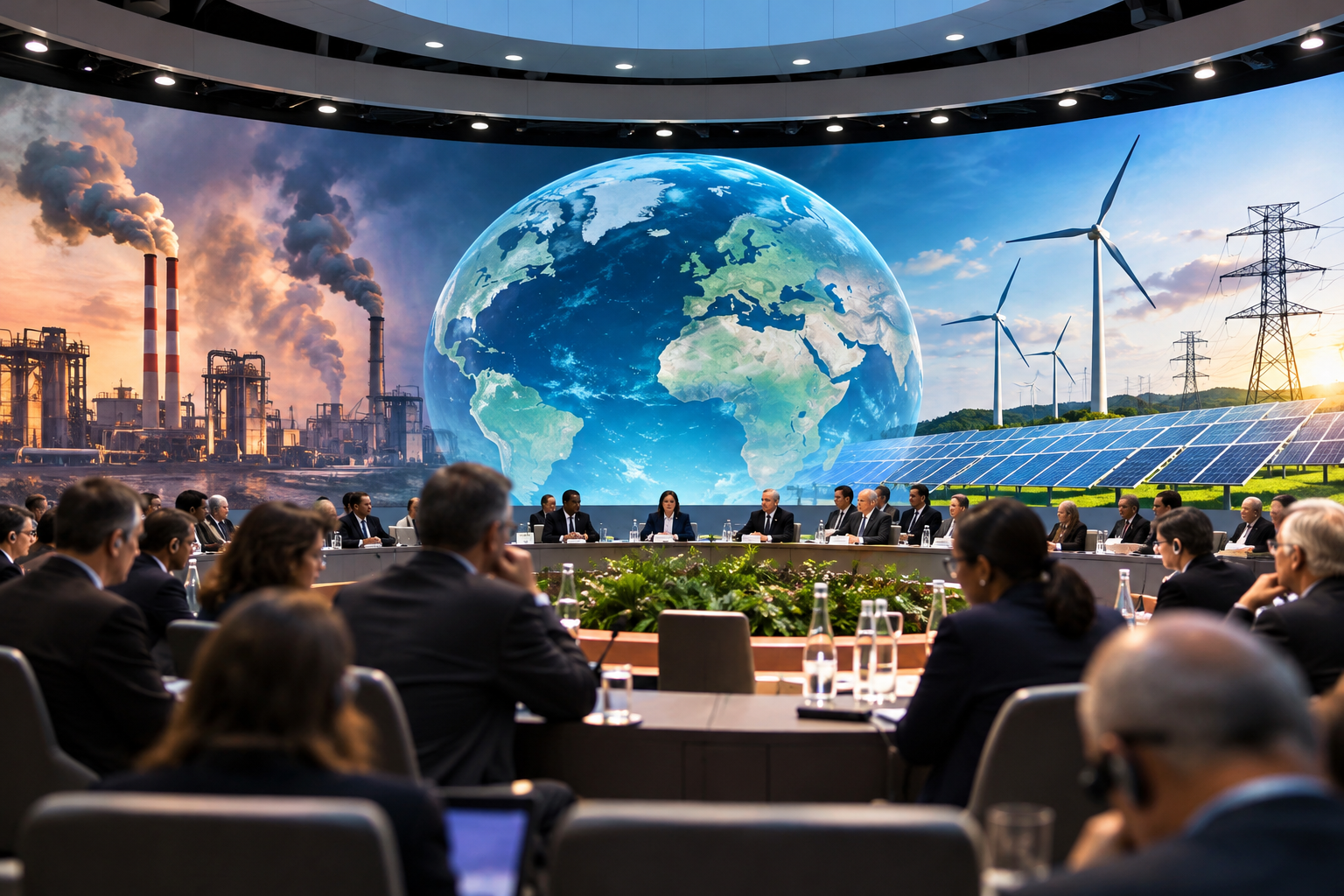
8. COP31 advances climate implementation but misses a political cover decision
COP31 concluded in Antalya on 22 November. Negotiators reached agreements on issues including just transition, climate finance and adaptation, while the conference also reported progress on electrification and other implementation initiatives. However, countries did not reach agreement on the presidency-led cover decision, leaving important political differences unresolved.
Why it matters: The outcome shows movement on practical climate action but continuing divisions over the political framework, finance and the pace of transition. Delivery will now depend on governments turning negotiated decisions into funded programmes.
Official source: UNFCCC — COP31 outcome
9. ICAO conference turns attention to aviation’s long-term transition
The International Civil Aviation Organization held its seventh Worldwide Air Transport Conference in Montréal from 16–20 November. Its programme considered how the aviation sector can navigate structural change and prepare for the industry’s longer-term development towards 2050, bringing governments and aviation stakeholders together around global air transport policy.
Why it matters: International aviation policy affects connectivity, safety, sustainability and investment priorities for airlines and airports. Long-term coordination is especially important as the industry balances growth with its environmental commitments.
Official source: ICAO 7th Worldwide Air Transport Conference bulletin
What to watch next week
Watch how the APEC and ASEAN–India commitments move into implementation; the next steps for the EU–Indonesia agreements; the pace of AI infrastructure investment and researcher access; and whether climate negotiators can rebuild consensus after COP31. In each case, the important measure will be delivery: funding, timelines, regulatory follow-through and measurable outcomes.
Muranika — Curiosity Meets Intelligence. A weekly guide to the developments shaping our world.
Leave a Reply