
MURANIKA · GLOBAL EXPLAINER | SUNDAY, 29 NOVEMBER 2026 | CLIMATE & ENERGY
COP31 ENDS WITHOUT A CLIMATE PACT, BUT ELECTRIFICATION GAINS MOMENTUM
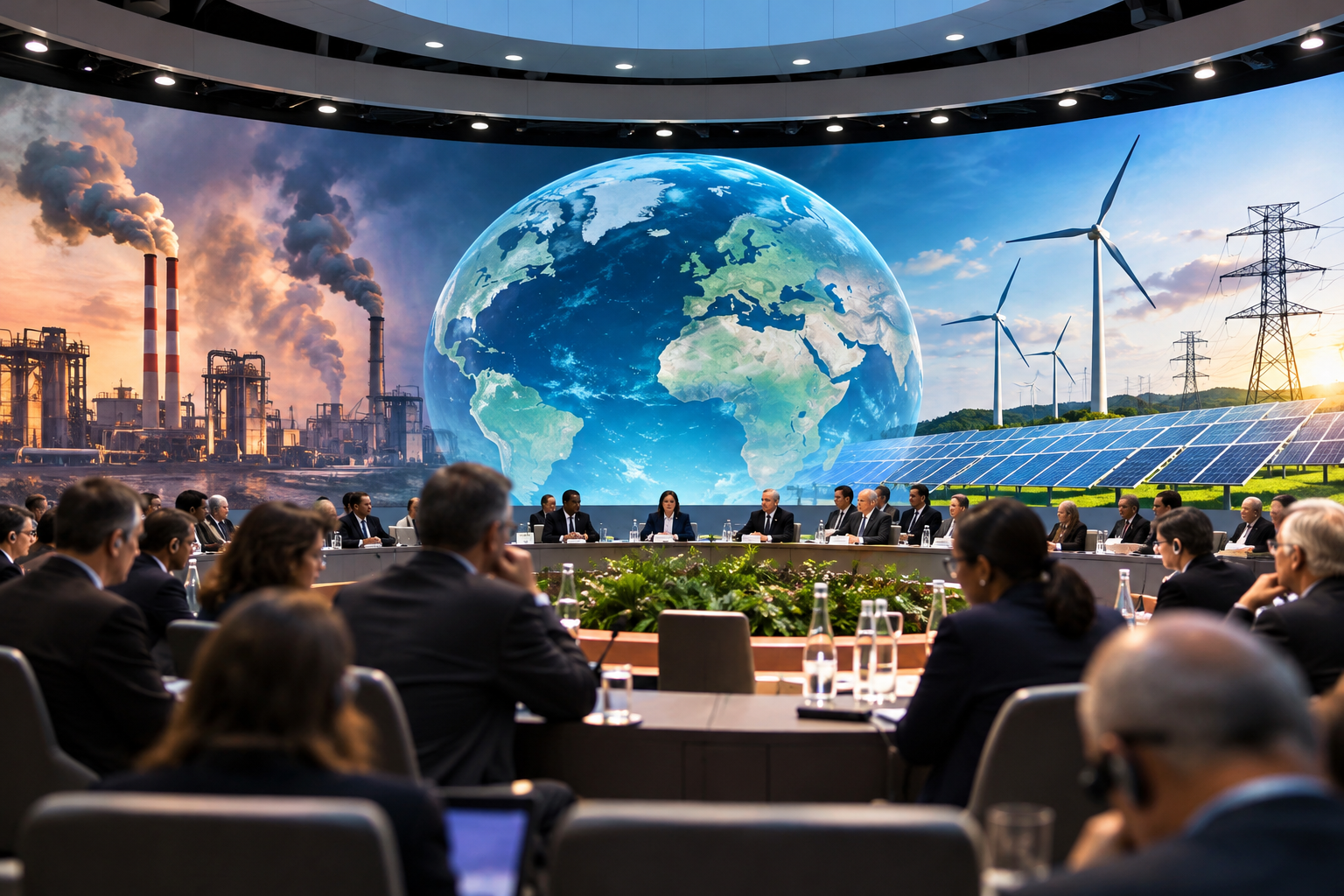
The United Nations climate summit in Antalya, Türkiye, ended without an overarching agreement after governments failed to bridge deep disagreements over fossil fuels and climate finance. Yet beyond the negotiating deadlock, a separate push to expand the use of electricity across transport, buildings and industry attracted support from dozens of countries and companies. The contrast captures the central challenge of the energy transition: political agreement remains difficult, while the practical shift in how economies produce and use energy continues.
THE SUMMIT’S BIGGEST DISAGREEMENT
COP31 negotiations ran beyond their scheduled close and concluded on 22 November without adoption of the proposed Antalya Pact. The draft did not include an explicit reference to fossil fuels, a point that led the European Union, Panama, the Marshall Islands, the United Kingdom and other countries to reject or withhold support for the text. Developing countries also criticised the lack of a clear, adequate financing pathway to help vulnerable communities adapt to climate impacts.
UN Secretary-General António Guterres described the outcome as deeply disappointing and warned that the absence of consensus did not change the scientific reality of climate change. Some technical decisions and initiatives did move forward, but there was no single political agreement setting out a shared direction for the summit.
Why it matters: International climate agreements help governments coordinate expectations, finance and policy. When countries cannot agree on the language around fossil fuels or the support owed to vulnerable economies, uncertainty grows for governments, investors and communities planning long-term energy and resilience projects.
THE ELECTRIFICATION PUSH: A DIFFERENT KIND OF MOMENTUM
One of the clearest initiatives outside the formal negotiations was a voluntary goal to increase electricity’s share of global final energy consumption from roughly 23% today to 35% by 2035. Reuters reported on 26 November that around 90 countries and 180 companies backed the goal. The effort focuses on replacing direct fossil-fuel use with electricity in areas such as electric vehicles, heat pumps and industrial processes, while expanding clean power and the infrastructure needed to deliver it.
Electrification is not automatically clean: its climate benefit depends on how electricity is generated. If grids continue to rely heavily on coal and gas, switching equipment from fuel to electricity may deliver smaller emissions reductions. The target therefore depends on parallel investment in renewable and other low-carbon power, transmission networks, storage, charging infrastructure and reliable grid connections.
Why it matters: Electrification can reduce oil and gas use, improve energy efficiency and create new demand for clean power. It also links climate policy to industrial competitiveness, energy security and household costs. The challenge is ensuring that countries with limited finance and weaker grids can participate rather than being left behind.
WHAT THIS MEANS FOR BUSINESS AND EVERYDAY LIFE
For manufacturers, the transition could mean greater demand for electric industrial equipment, power electronics, batteries, grid components and energy-management systems. For cities and households, it may bring more electric transport, efficient heating and cooling, and changing patterns of electricity consumption. Utilities will need to plan for new loads and strengthen networks so that clean power is available when and where it is needed.
But the economics will differ widely. Countries with affordable finance, modern grids and established clean-energy industries can move faster. Others may need international support to upgrade infrastructure, train workers and protect consumers from high upfront costs. Climate targets will matter most when they translate into projects that people and businesses can actually access.
WHAT TO WATCH NEXT
- National plans: Whether governments turn voluntary electrification support into funded policies and measurable targets.
- Grid investment: Whether transmission, distribution and storage expand quickly enough to support new electric demand.
- Climate finance: Whether developed economies and financial institutions provide clearer support for adaptation and energy transitions in developing countries.
- Fossil-fuel language: Whether the unresolved disagreement at COP31 shapes negotiations ahead of COP32 in Addis Ababa, Ethiopia, in November 2027.
THE MURANIKA TAKEAWAY
COP31’s failure to reach a broad political deal is a setback, but it does not mean the energy transition has stopped. The next test is delivery: cleaner electricity, stronger grids, affordable technology and fair access to finance. The world will judge climate promises not by the number of declarations, but by the changes that reach factories, transport systems and homes.
Sources and further reading: United Nations — COP31 ends without climate pact, 23 November 2026 · Reuters — countries and companies rally around electrification, 26 November 2026 · UK Parliament House of Commons Library — What happened at COP31?, 27 November 2026 · Carbon Brief — COP31 key outcomes, 23 November 2026.
Muranika Global Explainer · 29 November 2026 · Curiosity Meets Intelligence




Leave a Reply