READ THE PRINT EDITION: Download Today’s Newspaper (PDF)
MURANIKA · GLOBAL EDITION | SUNDAY, 29 NOVEMBER 2026 | WORLD NEWS DESK
THE WORLD, EXPLAINED: FIVE DEVELOPMENTS THAT MATTER
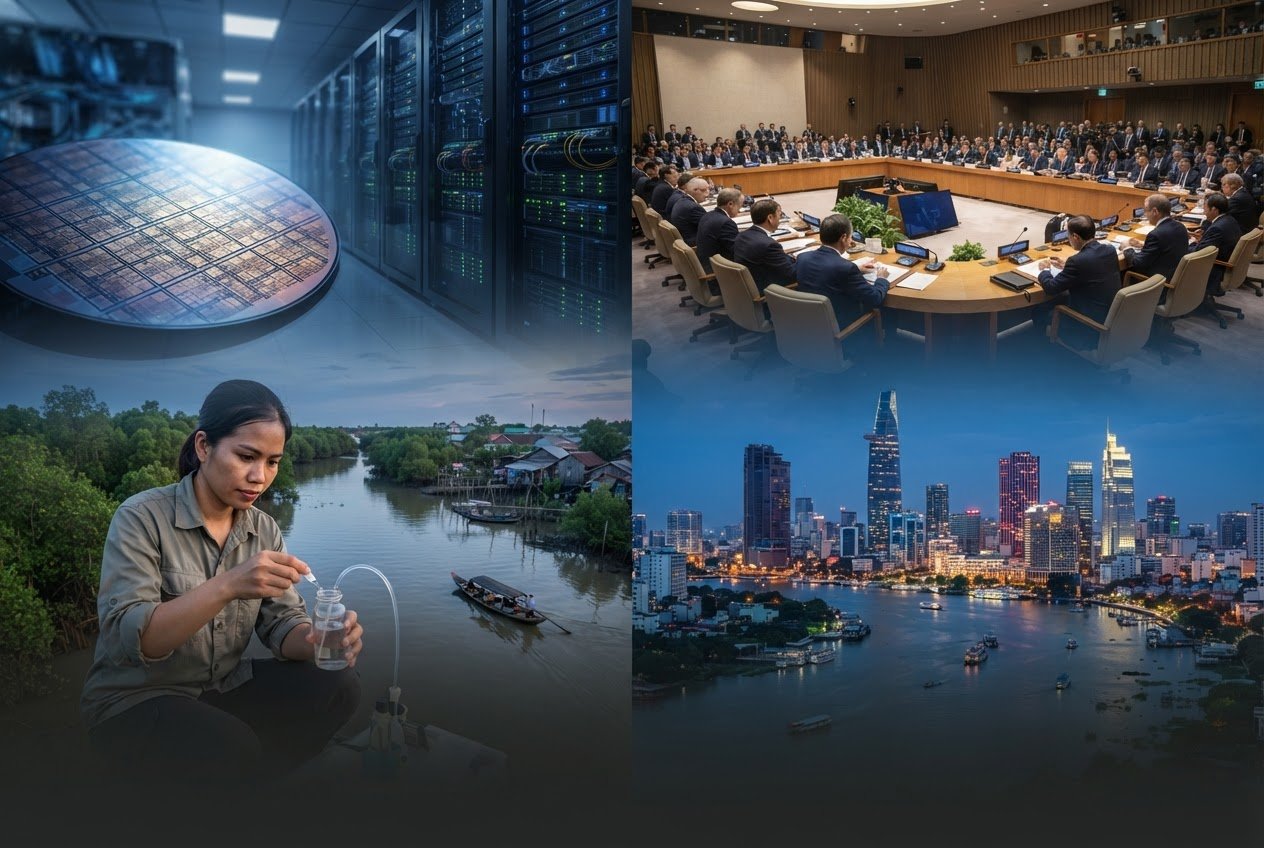
From environmental controls on rare-earth mining in Southeast Asia to new pressure points in the global semiconductor supply chain, this edition examines five developments with consequences beyond their immediate headlines. We focus on what is confirmed, who is affected and what to watch next.
1. MYANMAR AIR ATTACKS KILL CIVILIANS, INCLUDING AT A WEDDING VENUE
At least 30 people were reported killed in separate Myanmar military air attacks on 28 November, according to witnesses, rescue officials and local organisations cited by Al Jazeera and AFP. One strike hit a wedding venue in Moe Bye, where a local aid group reported 21 deaths, including five children. Another attack struck a market in Mrauk-U in Rakhine State, where a local funeral organisation reported nine deaths. The military had not provided a response to the reports at the time of publication.
Why it matters: The attacks underline the continuing danger to civilians in Myanmar’s conflict, including people gathered in ordinary community spaces. For humanitarian agencies, the immediate concerns are access to medical care, protection for displaced families and the ability to verify casualty reports independently. Figures may change as more information emerges.
Source: Al Jazeera / AFP — reports on the 28 November attacks · The Guardian / AFP — additional reporting
2. TWO DOCTORS WITHOUT BORDERS STAFF KILLED IN GAZA CITY STRIKE
Médecins Sans Frontières (MSF), also known as Doctors Without Borders, said two of its unarmed watchmen were killed in an Israeli drone strike at its Gaza City clinic on 27 November. MSF said the facility was clearly marked and that its location had been communicated to the Israeli military. The Israeli military confirmed the strike and said the men were Hamas operatives working as security guards; MSF disputed that account. The organisation said the deaths brought its staff toll in Gaza since October 2023 to 17.
Why it matters: The incident raises urgent questions about the protection of humanitarian personnel and medical facilities during conflict. MSF said the clinic, which had provided antenatal and postnatal care, family planning, nutrition, wound care and mental-health services, would temporarily suspend medical activities. The practical impact is therefore not limited to the two deaths: patients who rely on those services may also face disruption. The competing accounts of the strike require independent scrutiny.
Source: MSF — statement, 28 November 2026 · Reuters — report on the strike and the parties’ statements
3. THAILAND TO RESTRICT CHEMICAL EXPORTS LINKED TO MYANMAR RARE-EARTH MINING
Thailand says it will ban exports of chemicals used in mining from Monday, 30 November, targeting rare-earth operations in neighbouring Myanmar amid concerns about cross-border water pollution. Prime Minister Anutin Charnvirakul said the Defence Ministry would issue the order. Thai officials say mines in Myanmar’s Shan State may be contaminating rivers that flow into northern Thailand. Myanmar has asked for further evidence, and the two countries have agreed to establish 12 water-sampling sites, with joint testing expected between December and January. Tests conducted in August found arsenic above standards at several locations along the Kok, Sai and Ruak rivers, according to Reuters.
Why it matters: The issue connects critical-mineral supply chains with public health and environmental security. Rare earths are important inputs for products such as electric motors, electronics and renewable-energy technologies, but poorly controlled extraction can impose costs on communities far downstream. The export restriction is a planned government measure; the joint sampling process will be important in establishing the evidence and shaping any longer-term response.
Source: Reuters — Thailand’s planned export ban and joint water testing
4. OECD URGES VIETNAM TO MOVE UP THE SEMICONDUCTOR VALUE CHAIN
A new OECD report published on 25 November says Vietnam can strengthen its position in the global semiconductor industry by building capabilities in research and development, chip design, workforce training and supporting infrastructure. Vietnam already has a strong role in assembly, testing and packaging, supported by multinational investment and its wider electronics industry. The report recommends stronger university-industry collaboration, more shared research infrastructure, better intellectual-property protection and policies that help local firms and start-ups develop technology.
Why it matters: Semiconductor supply chains remain concentrated in a limited number of economies, encouraging governments to develop additional sources of talent and production capability. Vietnam’s next challenge is not simply attracting more assembly work; it is capturing more technical and economic value through design, specialised manufacturing and innovation. The OECD report is a set of policy recommendations, not confirmation that every proposed measure has been funded or implemented.
5. REPORTED NVIDIA GPU SALES RESTRICTIONS PUT CLOUD ACCESS UNDER SCRUTINY
CNBC reported on 26 November that some Nvidia chip distributors had begun refusing sales to cloud-computing providers that rent any share of their GPU capacity to Chinese companies. The reported shift follows new US Department of Commerce rules that took effect on 19 November and are intended to restrict indirect access to advanced AI chips through overseas data centres and cloud services. The report describes distributor responses in the supply chain; it is not an announcement that Nvidia has imposed a universal ban on every cloud provider with Chinese customers.
Why it matters: The development shows how export controls can affect not only chipmakers and direct buyers, but also data-centre operators, cloud customers and companies that rely on rented AI computing capacity. Providers may need to review customer screening, capacity allocation and compliance systems. The commercial reach of the policy will depend on how the rules are interpreted and enforced, and on how distributors apply them in practice.
Source: CNBC — reporting on distributor restrictions, 26 November 2026 · US Bureau of Industry and Security — export-control authority
WHAT TO WATCH NEXT
- 30 November: Thailand’s planned start of restrictions on exports of mining chemicals.
- December–January: Joint water sampling by Thailand and Myanmar to investigate river contamination.
- Semiconductors: Whether Vietnam translates the OECD’s recommendations into funded research, skills and infrastructure programmes.
- AI infrastructure: How US export-control requirements are applied to cloud access and GPU distribution.
- Humanitarian protection: Independent scrutiny and accountability following attacks affecting civilians and medical personnel in Myanmar and Gaza.
THE MURANIKA TAKEAWAY
Today’s developments show how closely connected global issues have become: technology policy shapes access to computing, mineral demand can affect water security across borders, and conflict can disrupt essential civilian services. Understanding the consequences—not just the headline—is what makes these stories matter.
Muranika Global Edition · 29 November 2026 · Curiosity Meets Intelligence