
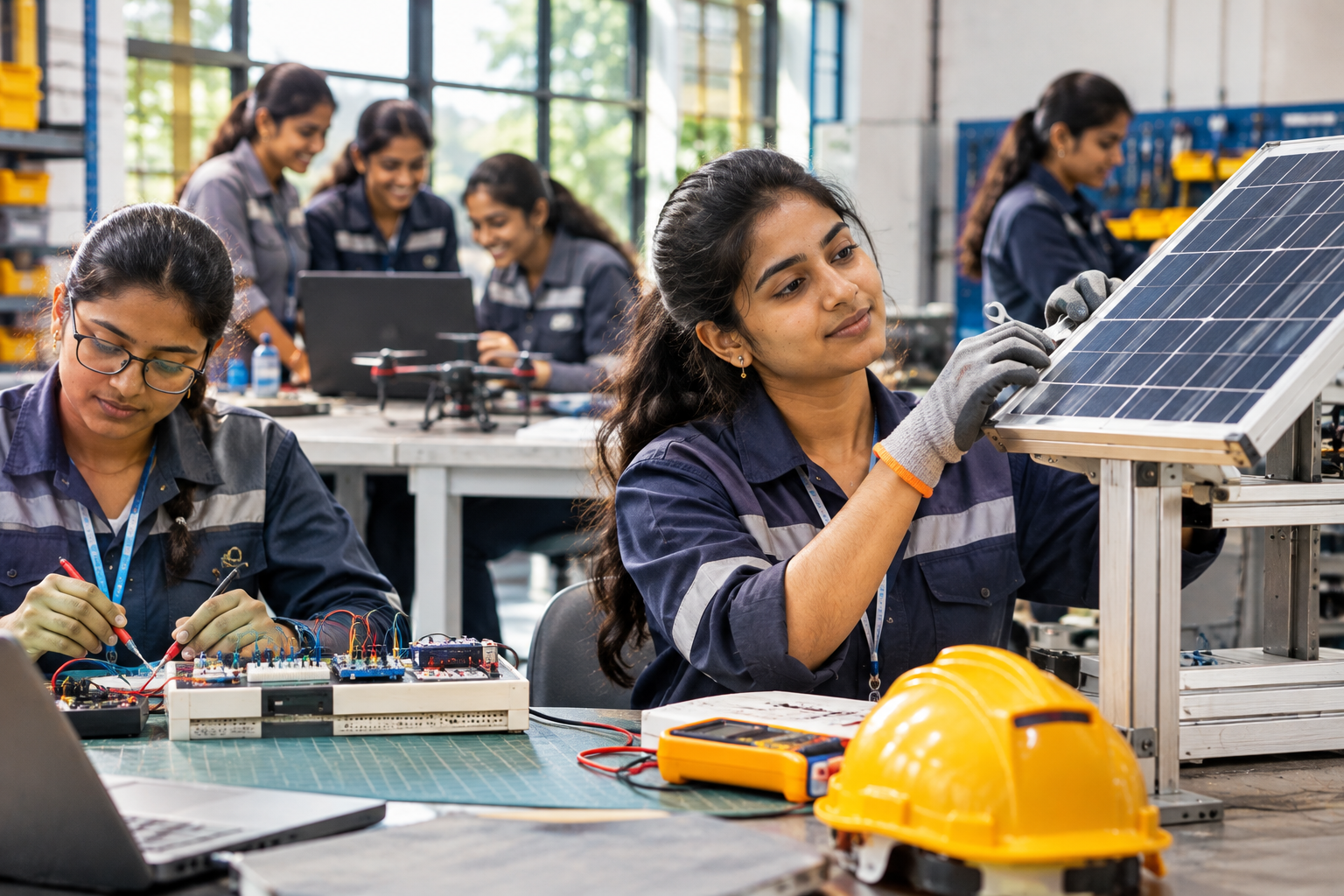
India is widening a vocational-skills initiative for adolescent girls and young women. The Ministry of Women and Child Development (MWCD) and the Ministry of Skill Development and Entrepreneurship (MSDE) announced the second phase of NAVYA—Nurturing Aspirations through Vocational Training for Young Women and Adolescent Girls—with a planned reach of 100 districts across 24 States and Union Territories. The formal launch was scheduled for 28 November 2026 in Haridwar, Uttarakhand. Source: Press Information Bureau.
What changes under NAVYA 2.0?
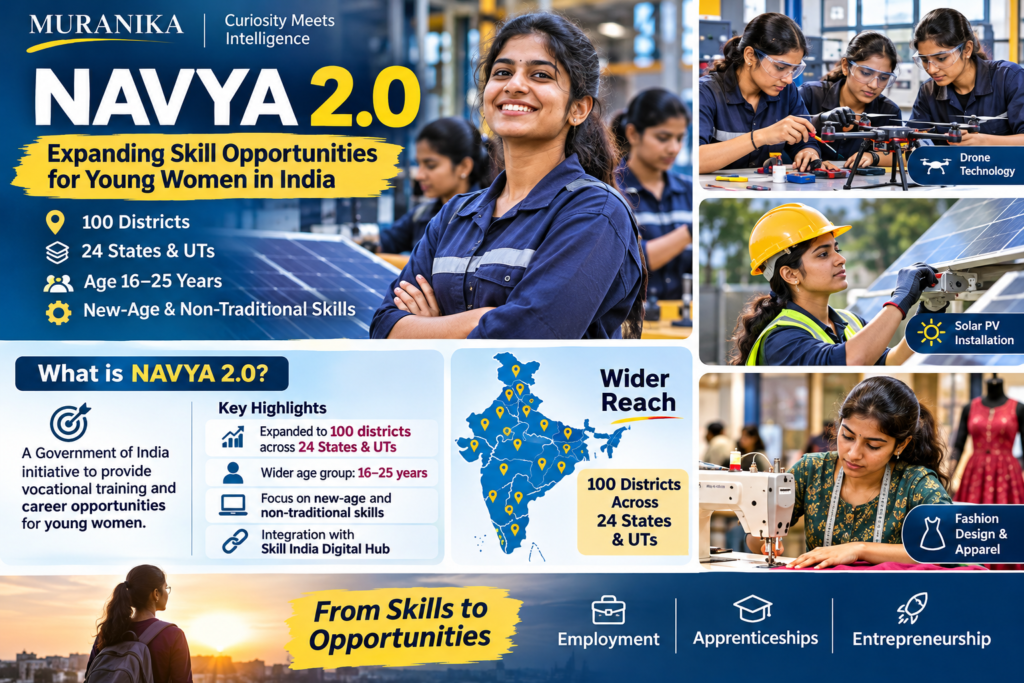
The most visible change is the wider age group. The pilot focused on girls aged 16–18; NAVYA 2.0 widens eligibility to 16–25, bringing more young women into the programme’s intended reach. The initiative is designed to improve access to industry-relevant, new-age and non-traditional vocational training, while strengthening pathways to employment, apprenticeships and entrepreneurship.
- **Coverage:** 100 districts across 24 States/UTs, with attention to aspirational and hard-to-reach areas
- **Age group:** 16–25 years, widened from the pilot’s 16–18 years
- **Training focus:** Industry-relevant, new-age and non-traditional job roles
- **Digital support:** Skill India Digital Hub for enrolment, progress tracking and certification
- **Career pathways:** Employment, apprenticeships and entrepreneurship
What did the pilot achieve?
NAVYA’s pilot phase began on 24 June 2025 in Sonbhadra, Uttar Pradesh, with an envisaged reach of 27 Aspirational Districts across 19 States. The latest launch note says approximately 1,200 adolescent girls received training in roles such as Drone Manufacturing and Assembly Technician, Solar PV Installation Helper and Fashion Designer. The programme also included digital and financial literacy, career readiness and entrepreneurship orientation.
There is a useful timeline detail. An earlier PIB update dated 10 August 2026 had already said NAVYA was being expanded to 100 aspirational districts with effect from 27 May, and reported 1,060 girls trained across 15 States/UTs as of 30 June. The latest NAVYA 2.0 announcement describes its reach as 100 districts across 24 States/UTs. The public updates use slightly different descriptions of the geographic coverage, so the district-wise implementation notice will be important for confirming local availability. Read the August PIB update.
How will training and certification work?
The Skill India Digital Hub (SIDH) is expected to support candidates through enrolment, training and certification. The platform will also help track registration, attendance and training progress, while digitally verifiable credentials can help learners demonstrate the skills they complete. Visit the official Skill India Digital Hub.
The announcement does not provide a complete district-wise list of training centres, course batches or an application deadline. It also does not promise a job to every participant. The stated aim is to strengthen pathways into work, apprenticeships and self-employment; actual opportunities will depend on the courses available, local implementation and employer connections.
What should interested candidates check?
Young women and families should look for updates from their district skill-development and Women and Child Development offices, and verify details through official government channels before applying. In particular, check:
- Whether the district and training centre are included in the current rollout
- Which job roles and course batches are actually available
- The training duration, certification and any stated costs or support
- Whether an apprenticeship or placement link is offered, and what it guarantees
- That registration is completed through official platforms rather than an unverified agent
A promising step—implementation will decide the impact
NAVYA 2.0 reflects a wider understanding of skills development: economic participation requires more than classroom instruction. Young women also need exposure to unfamiliar occupations, confidence, digital and financial literacy, credible certification and connections to employers or customers.
The expansion is encouraging, but the real test will be whether eligible candidates can find nearby courses, complete training and convert those skills into paid work or viable businesses. The next details to watch are the district list, training partners, course batches and measurable outcomes.


Leave a Reply