November 9, 2026 | Technology & AI | Muranika Editorial Team
Jensen Huang and Alice Huang: How a 2024 Taipei Photo Sparked Nvidia Spy Allegations
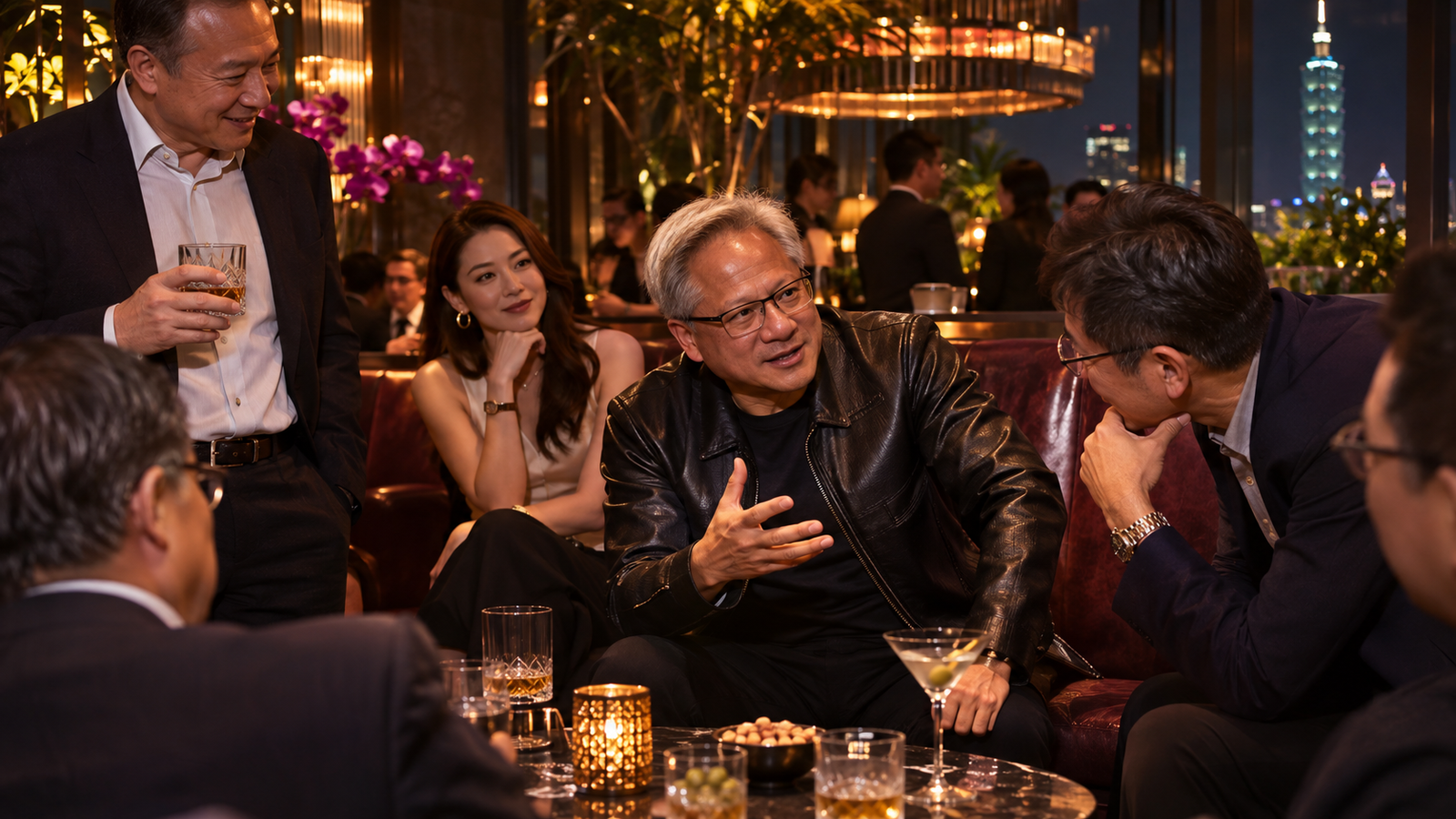
A photograph taken at a Taipei bar in June 2024 has become central to a controversy involving Nvidia CEO Jensen Huang, Chinese businesswoman Alice Huang, and allegations of a foreign intelligence operation.
What began as an apparently ordinary gathering of technology executives has now raised questions about corporate security, artificial intelligence technology, and US-China relations.
The Taipei Photograph That Raised Questions
In June 2024, Jensen Huang and Alice Huang were photographed together at a bar in Taipei during the Computex technology exhibition. Executives associated with Gigabyte and NetThunder were also present.
According to media reports, the two were subsequently seen together outside a Taipei restaurant, where Alice stood behind Huang as he spoke with journalists.
It remains unclear when they first met or how long their reported relationship continued.
At the time of the 2024 gathering, Megaspeed, a company associated with Alice Huang, had reportedly begun purchasing billions of dollars’ worth of advanced Nvidia AI chips.
What US Intelligence Reportedly Discovered
According to reporting by The New York Times, US intelligence authorities assessed that Alice Huang had been recruited by China’s Ministry of State Security.
She was allegedly tasked with developing a close relationship with Jensen Huang to obtain information about Nvidia’s advanced AI chips and business strategy.
The newspaper also reported that US President Donald Trump had been briefed about the suspected operation approximately one year before the allegations became public.
These claims remain allegations based on reported intelligence assessments, rather than publicly established findings of espionage.
Why Megaspeed and Nvidia Matter
Alice Huang previously worked as an executive at Singapore-based Megaspeed International, a company involved in data-center and AI computing services.
Megaspeed attracted US scrutiny over suspicions that restricted Nvidia AI chips could have reached China through its business operations.
The controversy is particularly sensitive because Nvidia’s advanced processors are central to global AI development, while Washington maintains restrictions on exporting certain high-performance chips to China.
Nvidia Responds as Jensen Huang Admits Infidelity
On November 8, 2026, Jensen Huang acknowledged in a message to Nvidia employees that he had been unfaithful to his wife and apologized to his family.
However, his statement did not identify Alice Huang by name or establish that he knew about any alleged intelligence operation.
Nvidia’s board announced an independent investigation, supervised by independent directors and external legal counsel.
The company said it had no reason to believe its confidential information or US national security had been compromised. It also expressed confidence in Huang’s leadership.
Meanwhile, China rejected the espionage accusations, describing them as unsubstantiated allegations intended to discredit the country.
What Happens Next?
The investigation will seek to clarify whether confidential information was exposed, whether security procedures were breached, and whether the reported intelligence concerns have implications for Nvidia.
For the broader semiconductor industry, the controversy highlights the importance of protecting sensitive AI technology while maintaining international business relationships.
The central question remains unanswered: Was this simply a personal relationship, or did it create a genuine corporate security risk?
Until investigators establish the facts, allegations should not be mistaken for confirmed wrongdoing.
What do you think about the security risks facing leading AI companies? Share your perspective in the comments.